Thursday, October 10, 2013

The Innovation Fork - #SAVMP

For week six of the SAVMP program, we are asked to consider "Roads to Innovation."

One of the questions to consider is: How do you go about creating innovative practices in your schools?

I use a two prong approach to fostering innovation at my school.

Prong one is to share ideas and resources with the staff. In each week's Monday Memo, I share links to interesting sounding tech tips. I sometimes demonstrate a new tool or teaching strategy during staff meetings. Last year, I tried my hand at teaching a class using only new ideas (not particularly successful, but that happens with attempts at innovation). At District PD days, I usually introduce some cool thing that I have been learning about. This first prong is all about sharing information or spreading seeds.

The second prong is where the real action is, sort of. The second prong is to get out of the way. Really, just step aside. Let the teachers do their thing. When a teacher comes to me with a new idea, I listen and offer support. I ask questions when the idea is half-baked. I try to be clear with the teachers that I am asking in order to help them. For some teachers, I say little other than, "Why not?" I often ask the teacher what they want me to do to help. Often, the answer is that they want nothing other than permission. I almost always say yes to a new idea, to an experiment. I am not risk averse. This second prong for creating innovative practice requires that I trust my teachers to be professionals - no problem there.

So, this two-prong approach is not fast, but when it works, change happens - teachers innovate.

I wrote about similar ideas for Leadership Day 2012.

Cross-posted to Connected Principals.


Enhanced by Zemanta


Sunday, October 6, 2013

Frog and Toad: A [Todo] List Lesson #cpchat #ilchallenge #savmp

Not long ago, I was reading Frog and Toad Together by Arnold Lobel, to my son. You know, the book from the early 70's about, well, a frog and toad who have silly, every day hijinks. While the reading level is a stretch for me sometimes, the stories teach some pretty simple lessons about getting along with others, being a good person, and the life and times of a public school principal.

What, Ed leadership lessons from Frog and Toad? Well, yes, sort of. Read on to find out more.

In one great story, "A List," Toad starts his day like principals the world over...

One morning Toad sat in bed. 
"I have many things to do," he said. 
"I will write them all down on a list so that I can remember them." 
Toad wrote on a piece of paper: A list of things to do today
Lesson 1: Write it down or forget it. There are many systems and styles for keeping track of todo lists. I prefer a web service/app called Toodledo. This powerful todo list has a couple of killer features. First, I can use it on the web and on iPad and on iPhone (I think that other devices are supported, too). Second, after learning about Start Dates from Justin Baeder, I love that with Toodledo, I can set it and forget it (I ought to give George Foreman credit here, yes?). In other words, if tonight, I remember that I must schedule end of year conferences with teachers starting on May 15, I can add a task, give it a May 15 start date, and then forget about it until May 15. As long as I've told ToodleDo to hide future tasks, I am set.


The story goes on:

Then Toad wrote other things on the paper. 
"There," said Toad. "Now my day is all written down."
Lesson 2: You must take the first step. Coming up with a great idea to be organized is useless if you don't actually start.

Toad actually engages in one of my favorite, useless, feel good activities:

Then he wrote: Wake up
"I have done that," said Toad, and he crossed out:  
Wake up
Lesson 2a: No lesson here other than remembering that it is the small things in life that can sometimes make us happy.

Toad continues his day and visits Frog.

"Hello," said Frog.
"Look at my list of things to do," said Toad.
"Oh," said Frog, "that is very nice." 
Toad said, "My list tells me that we will go for a walk."
"All right," said Frog. "I am ready."
Lesson 3: Toad actually uses his todo list! How many times has the principal wondered what to work next. Just look at the list. It is that simple (except, of course, when it is incredibly complicated). There may be a corollary here: others may follow if you ask them to do something that is actually written on your list. Maybe if we show them that it is on a list, they will follow. Maybe.

Later in the story, the wind picked up:

"Help!" cried Toad."My list is blowing away. What will I do without my list?"
"Hurry!" said Frog. "We will run and catch it."
"No!" shouted Toad. "I cannot do that."
"Why not?" asked Frog.
"Because," wailed Toad, "running after my list is not one of the things that I wrote on my list of things to do!"
Lesson 4: Uh-oh! This is not good. Principals need to be flexible and responsive. Our todo lists are useful tools, but really - I can just imagine it: Oh, Principal Fliegelman, please deal with these two fighting students. Sorry, not on my todo list today; I will add them in tomorrow. Of course, a principal can't do that. Just recently, Justin Baeder wrote about this in a blog post: the nature of the principalship and the way we have to handle tasks is different from they way most todo systems and apps are designed. Again, we have to be ready to change course any minute - just part of the job.

Moments later Toad gets stuck.

"I cannot remember any of the things that were on my list of things to do. I will just have to sit here and do nothing," said Toad. Toad sat and did nothing. Frog sat with him.
Lessons 5: The list does not make the principal. In fact, this would be a good place to insert ideas about creating systems to help get through a day or working with a wonderful admin assistant who has the principal well trained. Instead, I will share one last lesson.

Lesson 6: A successful principal will have a Frog to sit with.

So, Toad shows us both the value and the pitfalls of the todo list. This principal, for one, learned a lot.


Sunday, September 15, 2013

School as Leadership Darkroom: Developing Leaders #Savmp

So, for the SAVMP program, the weekly blogging topic (#5, but only my second), that George has assigned is as follows:

"For this week’s topic, I want you to think about how you develop leadership in your buildings/work. How do you promote others to lead? This is important to focus on whether we try to “control” our people, or “unleash” their talents. What are some of the things that you do that make this happen?"
This year, as I have been focusing a bit on growing teacher leadership, I have (re-)learned two lessons about developing leadership.

Lesson one started about more than one year ago. A teacher, we'll call her Gladys, asked me if she should apply for the newly vacated position of Director of Curriculum for the district. Wow! Sure. Gladys is a great teacher with a fairly wide-ranging teaching experience. She'd proved willing and able to take on some building and district leadership roles. Go for it. But, wait. If Gladys were to go to central office, then she wouldn't be here. Not sure I liked the sound of that. I kept my reservations to myself and encouraged her to apply. More qualified applicants came forward and Gladys did not get the job. We dodged that one - this time.

That brings us to this past June. Upon the sudden departure of another district principal, the superintendent asked what I thought about Gladys becoming principal. Wow! Sure. Gladys is a great teacher with a great attitude and ability to see the big picture. Through the last year, she'd taken on even more of a leadership role in the building. But wait, if Gladys were to go be a principal, then she wouldn't be here. Not sure I liked the sound of that. This time, I shared my reservations. Gladys proved to be the most qualified candidate and got the job. No dodging this time.

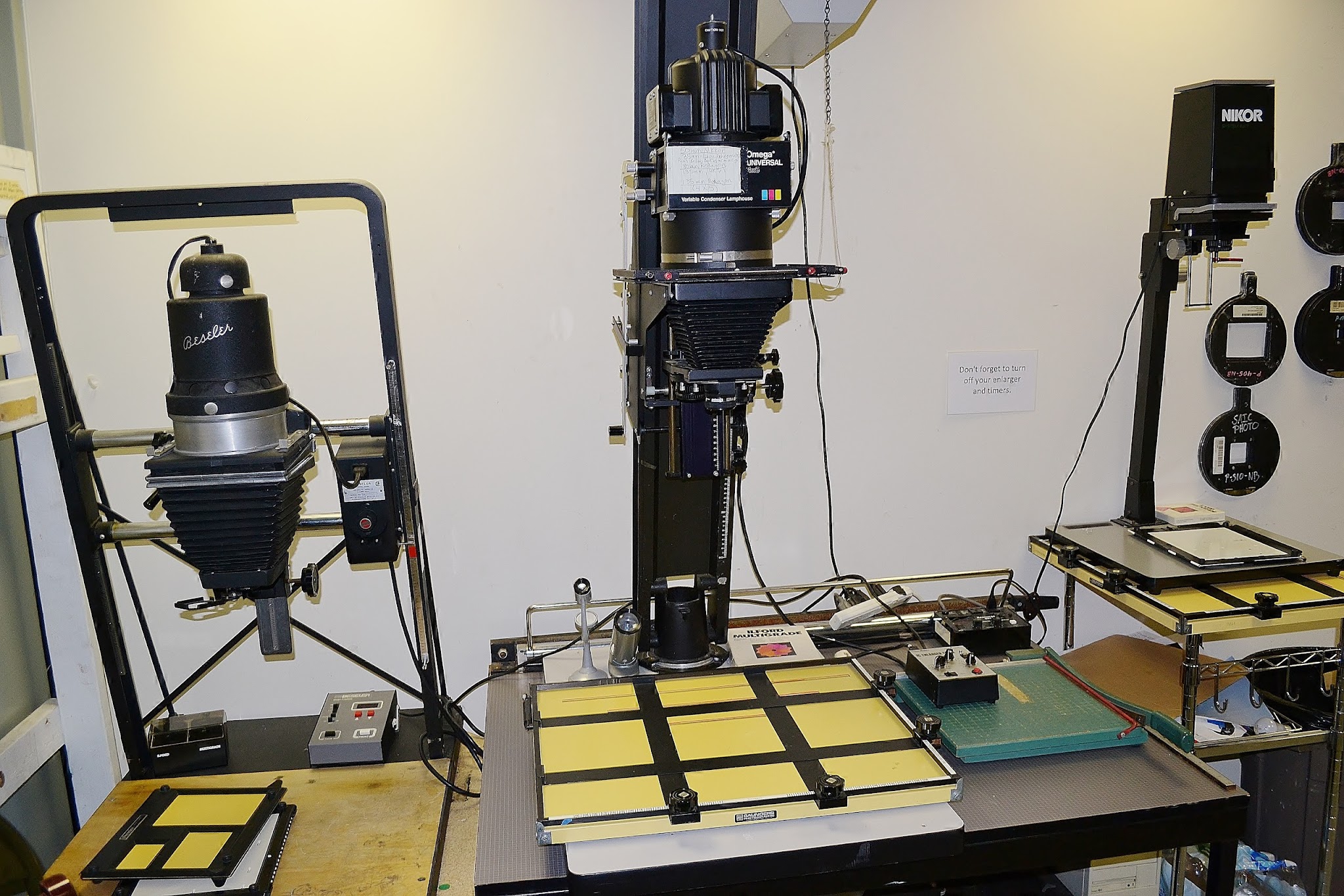
A lesson from my old photography days (you know, with film), crept back into my mind. When you develop the negative (the film), it is in service of a positive (the print). Not exactly sure what that means, but the point is clear: when you actively work to develop a teacher into a teacher-leader, sometimes it works really well the teacher-leader wants to become a leader-leader.

The second lesson from the leadership darkroom, you can't always be certain of what will develop once you start processing. Hmm.

With these two lessons, back under my belt, I enter this school year right back at it. I am actively working with a teacher or two to develop their leadership. They may move on or develop into something I don't expect. I can handle that. Both lessons were part of why I loved developing photographs, and both lessons are why I love developing leaders.

Saturday, August 10, 2013

Why I Lead... #savmp

Principal Haldane
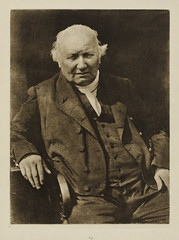
Principal Haldane (Photo credit: Preus museum)
Three years ago, George Couros started something awesome: Connected Principals. I have been contributing all along and learning tons from reading the other principals. Connected Principals has been a cornerstone of how I share and learn.

So, when George announced the School Administrators Virtual Mentor Program (SAVMP), I jumped in. I have made contact with my "mentees" and this is my first "assignment" from George. The prompt is: "Why I Lead."

Easy, peasy, mac and cheesy.

I lead because I love it. I am a principal because I love it. I love the challenges; I love the excitement; I love the successes; I even love the failures. Ok, maybe I don't love the failures, but they are an important part of the job.

I lead because of students like Johnny (name changed to protect the not-so-innocent). Johnny is one of those kids that drive teachers crazy - can't sit still, can't stay quiet, totally unredeemable. Except of course, that is, until we figured him out a little bit more. An army of school staff tried and failed over three years to figure him out, but finally this past year, we came up with the right plan. Johnny finished the year with many weeks without an office referral. His spring assessments showed tons of growth. Kids like Johnny are why I lead.

I lead because of teachers like Jane (again, name changed to protect the not-so-innocent). Five years ago, Jane, a long time elementary teacher, let everyone know that computers were not worth it, and not for her. Something changed, Jane asked for help from a colleague and got started learning how to use and teach with computers. Today (just a few before she reitres), Jane is the building leader in having kids use technology. She is transforming her teaching in her final years. Teachers like Jane are why I lead.

I lead because I love it.

Enhanced by Zemanta

Sunday, August 4, 2013

Hire Ground in School Hiring #edchat #savmp


With the school year only a few weeks away, this administrator is finally about to wrap up the process of hiring all the staff I need for the year.

It all started this spring...

Due to changes in grant funding, a para-educator getting a teaching job, and one of my best teachers leaving to become a principal, I found myself finishing the school year in June with three unanticipated openings. Now, many hours later, many resumes later, many interviews later I am just about done. Two candidates have signed on and the last one has a little more work to do to make her final decision.

The process of hiring is time-consuming and one of the most important tasks for a principal.

It starts with creating the ad. In Vermont, most schools use schoolspring.com to post jobs and collect resumes.

Aspiring to be a connected principal, I use many of the built-in features of school spring instead of just printing resumes and going old-fashioned route. I let schoolspring manage the process for me wherever possible first by setting up evaluation rounds where, as resumes come in, I evaluate them based on their experience education and other factors.


Then, I select the best of the group (three to five candidates usually) and let SchoolSpring do the work of setting up interviews. I have to choose dates and times, but then SchoolSpring sends emails to the candidates. The day before the interview, I make sure that the team has seen the resumes and knows the schedule.

The team, what team? Well, I rarely interview alone. You see, I truly believe in collaborative decision-making. I have seen the power of the group in making better hiring decisions than I would have alone. So, I gather a tem to interview.

My interview process pretty typical. I usually add my favorite question, "What are you reading these days?" Or, "What is your favorite book?" I am fascinated by the range of answers. Some candidates think I am asking about professional reading. Others gush about the latest best seller. Last year, one candidate blushed, stammered, and said, "Fifty Shades of Grey." Two women on the team blushed too and admitted they were reading it too. I hired her.

The are many things to look for when hiring teachers and paraprofessionals, but I have one characteristic that outweighs everything else: attitude. I've written about attitude before (here and here.)

I am not willing to hire even the most brilliant skilled teacher if I detect a bad attitude. This is how I maintain the hire ground.


Enhanced by Zemanta